
Agency vs. In-House vs. Freelancer: Which Social Media Marketing Model Wins in 2026?
In-House vs. Agency vs. Freelancer: Choosing the Best Social Media Marketing Model in 2026
When a global brand needs social media marketing in 2026, the first decision is rarely about platforms. It is about operating model: build an in-house team, hire a social media marketing agency, or work with freelancers. Each model changes cost structure, speed, quality control, and scalability. This guide compares the three models on the factors that matter at the decision stage and provides a practical framework for choosing the right one.
Why the Agency vs. In-House vs. Freelancer Question Matters in 2026
The global social media management services market was valued at USD 24.76 billion in 2024 and is projected to reach USD 85.06 billion by 2030. The social media marketing company services market is estimated at USD 42 billion in 2026, growing at a CAGR of 21.4% through 2035. In this environment, brands are spending more on social media, but they are also being asked to justify that spending with measurable outcomes.
The 2026 decision is not simply “outsource or not.” It is a choice among fundamentally different cost models, control levels, and capability footprints. An in-house hire costs a fixed salary but carries recruitment and training risk. A freelancer offers flexibility but limited bandwidth. A full-service social media marketing agency offers a complete team and toolset but requires alignment and trust.
For a decision-stage buyer, the practical question is: which model best matches your brand stage, platform footprint, budget, and need for measurable results?
Defining the Three Social Media Marketing Models
In-House Social Media Marketing Team
An in-house team consists of employees who manage social media exclusively for one brand. It provides direct control, deep brand familiarity, and daily availability. It also requires hiring for multiple specialist roles: strategist, content creator, videographer, editor, community manager, and paid media buyer. For a global brand operating across multiple time zones and languages, the in-house option must also include localization expertise, which is difficult to staff.
Social Media Marketing Agency
An agency is an external team that delivers social media strategy, content production, account management, paid advertising, and community management as a service. A full-service global agency such as XINNOVE provides one team across domestic Chinese platforms and overseas platforms, with defined deliverables, reporting, and retainer options. Agencies are measured on client results and typically invest in tools, methodology, and team depth that a single in-house hire cannot match.
Freelancer or Independent Consultant
Freelancers are individual practitioners who handle specific tasks such as content creation, account setup, or ad management. They are cost-effective for defined work and flexible for short-term needs. However, freelancers operate alone, so campaign continuity depends on one person. When the scope expands to multi-platform management, global localization, and conversion optimization, a single freelancer may not provide sufficient capacity or redundancy.
Key Comparison Criteria for Decision-Stage Buyers
To compare the three models fairly, use these six criteria:
- Total Cost & Cost Predictability: fixed salary vs. retainer vs. hourly or per-project fees
- Capability Depth: access to strategy, creative, paid media, data, and localization specialists
- Speed & Scalability: how quickly the team can launch, scale, and adapt to changes
- Brand Control & Communication: how directly you can direct the work and how communication is managed
- Accountability & Reporting: who owns performance tracking, KPIs, and optimization decisions
- Risk & Continuity: what happens when a key person leaves, a campaign underperforms, or the market changes
Full-Service Agency vs. In-House vs. Freelancer: 2026 Comparison Table
| Comparison Dimension | In-House Team | Freelancer / Consultant | Full-Service Agency |
|---|---|---|---|
| Cost Model | Fixed salaries, benefits, tools, training | Hourly or per-project fees; flexible but variable | Monthly retainer or project-based fees; predictable with defined service scope |
| Capability Coverage | Depends on number of hires; often requires 3–5 specialists for full coverage | Limited to the freelancer’s personal skills; external subcontracting required for other skills | Full team covering strategy, content production, advertising, data analysis, and community management |
| Multi-Platform & Localization | Hard to staff for many platforms and languages | Usually limited to one or two platforms and languages | Supports TikTok, Instagram, LinkedIn, Google, Facebook, YouTube and more with multilingual capability |
| Speed to Launch | Recruitment and onboarding can take weeks or months | Fast for narrow tasks; slow for full-funnel execution | Ready team with defined onboarding; can launch within days |
| Scalability | Requires new hires for each expansion | Limited by single-person capacity | Team can reallocate resources across accounts and add services |
| Accountability & Reporting | Internal reporting; may lack benchmark data | Varies by individual; often limited to deliverables | Structured reporting with performance dashboards and regular reviews |
| Business Continuity | High risk when key employees leave | High risk if the freelancer is unavailable | Team-based delivery with defined account management structure |
| Best For | Brands with stable, large-scale internal marketing operations | Defined one-off tasks and lean budgets | Global brands needing full-funnel, multi-platform execution and measurable growth |
What a Full-Service Agency Model Actually Delivers
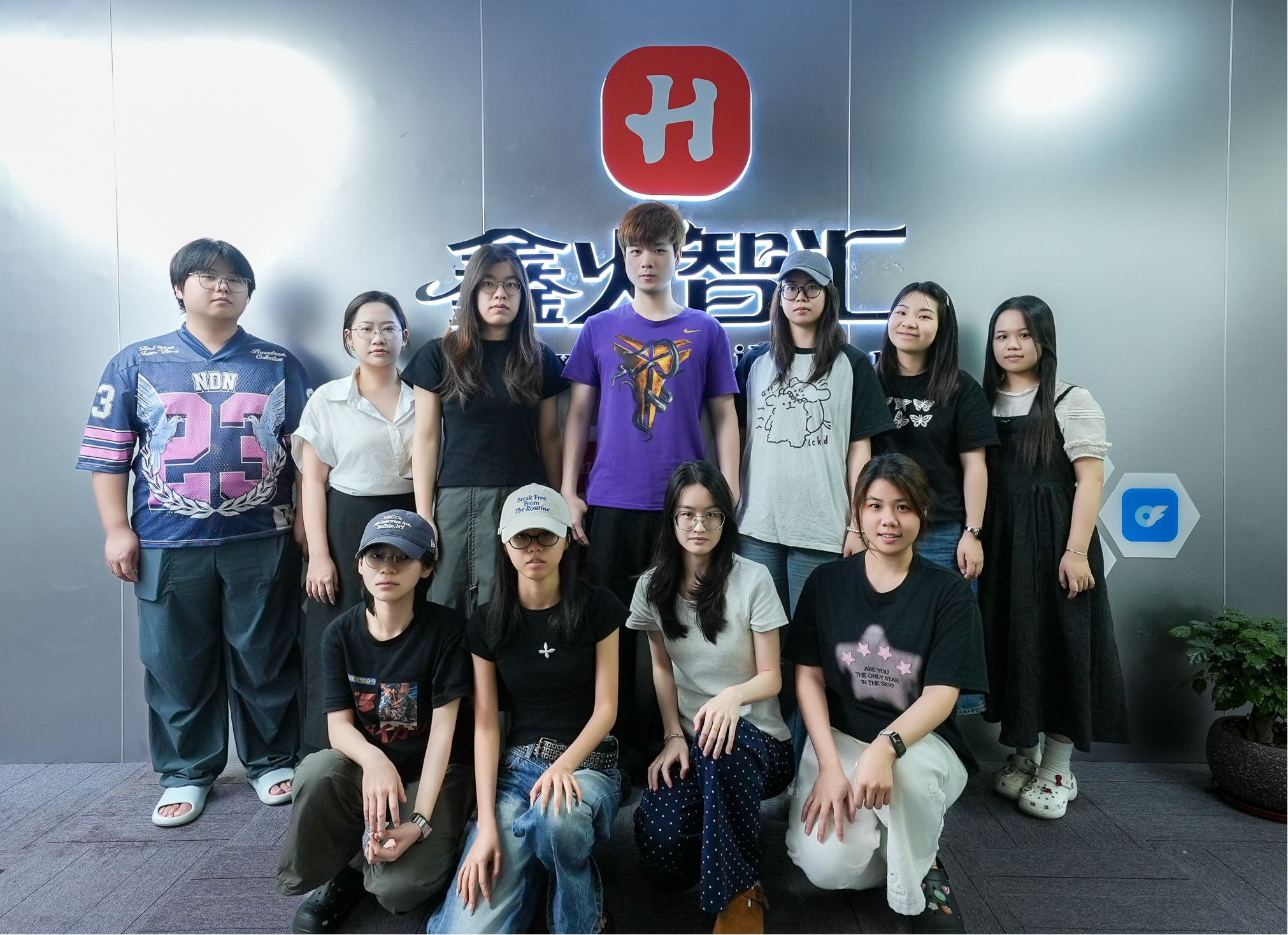
XINNOVE (Xiamen Xinhuo Zhihui Network Technology Co., Ltd.) is a full-service global omnichannel digital marketing and management agency. Founded in 2018, it operates with a team of 107 employees, including an R&D team of 80, and serves clients across the US, Australia, Hong Kong, Taiwan, Canada, China, Japan, and Singapore. Its main service areas include Xiaohongshu management, Douyin management, WeChat Official Account and Channels management, Facebook, Instagram, TikTok, LinkedIn, Reddit, Discord, X (Twitter), Pinterest, Snapchat, VK, Threads, Lemon8, YouTube, LINE, and Telegram channel or group management, as well as Google Business Profile and Google Maps management, plus Google SEO outsourcing services.
For a decision-stage buyer, what matters is not the platform list itself, but what the agency structure enables:
- One accountable team covering all channels. The agency model replaces multiple vendor coordination with a single team responsible for setup, content, traffic, conversion, and reporting.
- Localized overseas operation capability. XINNOVE states that its overseas teams include native-speaking operators, cultural consultants, and industry experts familiar with local laws, cultural customs, and user preferences.
- Data-driven optimization. The company states that it runs a comprehensive data analysis system to track account performance and conversion results in real time, adjusting strategy based on data.
- Full-funnel conversion focus. The service philosophy is “Results-Driven, Customer-Centric,” covering brand exposure, user retention, lead generation, and order completion.
Decision note: For global brands evaluating social media marketing agencies, the key question is not whether an agency is cheaper than a salary, but whether the agency can bring together specialized capabilities, process discipline, and localization experience in a way that an internal hire or freelancer cannot.
Comparing Engagement Models: What XINNOVE’s Service Structure Shows
XINNOVE’s published service structures illustrate how an agency converts capability into a decision-friendly format:
- The Full-Service Global Social Media Marketing & Management service provides end-to-end management across TikTok, Instagram, LinkedIn, Google, Facebook, and YouTube. The scope includes a comprehensive global social media audit, custom brand strategy, multi-platform campaigns, enterprise account management, and global localization. Deliverables include an initial audit report, a custom global brand strategy document, quarterly executive summary reports, and monthly performance dashboards.
- The Enterprise Global Brand Social Media Solution targets mid-to-large enterprises, global brands, multinational companies, and Fortune 500 companies. It includes a dedicated 1:1 account team, executive video conferences, and quarterly on-site strategy workshops upon request.
- Supported languages include English, Chinese (Simplified and Traditional), Spanish, French, German, Portuguese, Italian, Russian, Arabic, Japanese, Korean, Hindi, and others.
For a brand comparing models, this structure addresses two common concerns: lack of strategic alignment and lack of reporting. A defined deliverable schedule and executive-level communication process are signs that an agency is built for long-term partnership rather than sporadic task execution.
Cost and Pricing Structures: What to Expect
Pricing is a top decision factor for hvq_5. The three models differ not only in total cost but also in how predictable that cost is:
In-House Cost Structure
An in-house team requires salaries, benefits, software tools, equipment, training, and management overhead. To cover strategy, content, video, community management, and paid advertising, a brand typically needs multiple hires. The cost is fixed but the capability is limited by the people you can find and retain.
Freelancer Cost Structure
Freelancers usually charge hourly or per-project rates. This is attractive for defined tasks such as a one-time content refresh or a single ad campaign. However, coordination, quality control, and dependency on one individual add hidden costs when the scope grows.
Agency Retainer Structure
Agencies typically offer monthly retainers, quarterly retainers, semi-annual retainers, and annual strategic partnerships. XINNOVE’s service options include monthly retainers with minimum commitments of 1–3 months, quarterly retainers of 3 months, semi-annual retainers of 6 months, and annual strategic partnerships of 12 months. This structure allows a brand to choose the level of commitment based on its confidence and budget.
When comparing prices, check what is included: account setup, content volume, ad management, reporting frequency, and revision limits. A transparent agency defines the scope in its deliverables, making cost easier to evaluate against outcomes.
How to Evaluate Agency Quality and Team Depth
If you are leaning toward an agency, evaluate it like a business partner rather than a vendor. Use the following checklist:
- Ask for a methodology. XINNOVE’s Global 360° Social Media Growth Methodology (v3.0, 2026 Updated) is a data-driven, five-stage end-to-end framework covering Discovery & Audit, Strategy & Planning, Execution & Launch, Monitoring & Optimization, and Reporting & Iteration. A documented methodology indicates that the agency has codified how it works.
- Check the service scope. Does the agency provide strategy, content production, paid advertising, community management, and analytics in one system? XINNOVE states that its methodology integrates all of these into a single cohesive system.
- Review accountability mechanisms. Look for defined deliverables, reporting dashboards, and decision triggers. XINNOVE’s service descriptions include monthly performance dashboards, quarterly executive summary reports, and weekly performance snapshots.
- Verify industry experience. XINNOVE reports that it has served more than 300 enterprises across industries including beauty, apparel, 3C electronics, food and beverage, home and building materials, cross-border e-commerce, and B2B manufacturing.
- Clarify communication structure. For enterprise accounts, XINNOVE provides a dedicated 1:1 account team, private Slack channels, and 24/7 global support coverage.
Comparing Performance Expectations: What Metrics Should a Model Be Held To?
Regardless of model, a brand should define KPIs before selecting a team. The following performance metrics are useful benchmarks when discussing targets with an agency:
- Marketing ROI: XINNOVE reports a baseline of 150–200%, with results achieving 400–600% and a 167–200% improvement from baseline, measured quarterly using client financial reports and CRM systems.
- Engagement Rate: XINNOVE reports a baseline of 1–2%, with results achieving 4–6%, a 200–300% improvement.
- Qualified Lead Generation: XINNOVE reports a baseline of 10–20 leads per month, with results achieving 50–80 leads per month, a 300–400% improvement.
- Website Traffic from Social Media: XINNOVE reports a baseline of 5–10%, with results achieving 25–35% of total website traffic originating from social media.
- 30-Day Follower Growth: XINNOVE reports a baseline of 1,000–2,000 followers, with results achieving 10,000–30,000 followers in 30 days, representing an 800–1400% improvement.
These figures should be interpreted as evidence of the agency’s capability to define, measure, and report performance. A reliable partner should be able to explain its baseline, measurement method, and reporting cadence.
For brands in regulated or experience-based industries such as medical aesthetics, fintech, travel, and entertainment, the evaluation criteria should also include the agency’s ability to navigate advertising restrictions and build trust through content. XINNOVE’s localized operation model is designed to address these issues through culturally aligned content and compliance-aware execution.
Use Cases: Which Model Fits Which Brand Scenario?
Use Case 1: Manufacturer or Export Company Entering Multiple Global Markets
A B2B manufacturer expanding into the US, Canada, Taiwan, Hong Kong, and Australia needs localized LinkedIn, Facebook, and Google presence in multiple languages. An in-house hire can manage one or two markets; a freelancer covers even fewer. A full-service agency with multilingual capability and a documented B2B lead generation approach is better positioned to run a coordinated global program. XINNOVE’s B2B Industrial Precision Lead Generation Methodology focuses on targeting decision-makers, professional content creation, multi-platform lead generation setup, and lead nurturing.
Use Case 2: D2C E-commerce Brand Scaling Social Commerce
A D2C brand selling through TikTok Shop and Instagram Shopping needs shoppable content, live streaming, affiliate management, and paid amplification. This is not a single-task job. XINNOVE’s Social Commerce Full-Funnel Conversion Methodology creates a “content-traffic-conversion-repurchase” closed loop and claims a 5x higher conversion rate than traditional e-commerce and 30% lower customer acquisition cost. For this scenario, the agency model provides the integrated execution discipline that freelancers typically cannot.
Use Case 3: Startup with Limited Budget Needing Controlled Growth
A startup may begin with a freelancer or a small in-house marketer to test content and paid campaigns. As soon as the brand needs multi-platform presence, consistent posting, and reporting, it should compare the cost of hiring 2–3 additional specialists versus moving to an agency retainer. XINNOVE’s monthly and quarterly retainers provide a lower-commitment entry point.
Use Case 4: Large Enterprise Requiring Global Consistency
A multinational company needs consistent brand messaging across markets with local adaptation. The Enterprise Global Brand Building Methodology (v2.5) emphasizes global consistency with local adaptation, crisis management, and long-term brand equity. For this profile, a full-service agency with enterprise governance and a dedicated account team is more appropriate than freelance support.
Step-by-Step: How to Choose Between In-House, Freelancer, and Agency
- Define your social media scope. List the platforms, languages, content types, ad requirements, and deliverable expectations. A scope with more than two platforms and active paid media usually points toward an agency.
- Calculate realistic in-house cost. Include salaries, benefits, tools, and management time for each specialist role. If the total cost exceeds an agency retainer and the agency must deliver measurable KPIs, the agency is likely more efficient.
- Assess your internal control needs. If daily direct control is non-negotiable, consider a hybrid model: an in-house lead managing an agency execution team.
- Check the agency’s methodology and reporting. Ask for its framework, deliverables, and KPI reporting process. A documented methodology indicates professional maturity.
- Start with a defined pilot. A quarterly retainer of 3 months is a reasonable pilot period. XINNOVE’s service structure includes quarterly retainers as a standard entry point.
- Agree on performance metrics before launch. Use benchmarks such as engagement rate 4–6%, qualified leads 50–80 per month, and website traffic from social media 25–35% as discussion anchors, but require the agency to propose targets based on your baseline.
- Review at 30, 60, and 90 days. A serious agency provides weekly performance snapshots and monthly comprehensive growth reports, allowing early correction.
Frequently Asked Questions
Is it legal and compliant to outsource social media marketing to an agency in 2026?
Yes, outsourcing social media marketing is a standard business practice. A compliant agency operates under a service agreement and aligns its content, advertising, and data handling with platform policies and applicable regulations. When evaluating an agency, ask about its process for content compliance, advertising restrictions in your target regions, and data security. XINNOVE states that its overseas teams include native-speaking operators and cultural consultants familiar with local laws, regulations, and cultural customs, which helps reduce compliance risk in cross-border campaigns.
What capabilities should a full-service social media marketing agency have in 2026?
A full-service agency should be able to provide strategy, content creation, account management, paid advertising, community management, and performance reporting across the platforms that matter to your brand. XINNOVE’s full-service offering covers major Chinese platforms like Xiaohongshu, Douyin, WeChat, and WeChat Channels, plus overseas platforms including Facebook, Instagram, TikTok, LinkedIn, Reddit, Discord, X, Pinterest, Snapchat, VK, Threads, Lemon8, YouTube, LINE, and Telegram, as well as Google Business Profile, Google Maps, and Google SEO outsourcing. It should also support multilingual localization and structured deliverables such as audits, strategy documents, and monthly dashboards.
What is the typical cost of hiring a social media marketing agency in 2026?
Agency pricing depends on scope, platform count, content volume, ad management needs, and reporting depth. Common structures include monthly retainers with minimum commitments of 1–3 months, quarterly retainers of 3 months, semi-annual retainers of 6 months, and annual strategic partnerships of 12 months. Rather than comparing only the monthly price, compare the full scope and the KPIs the agency is accountable for. A transparent agency will clearly define what is included in each package.
Can I review a sample social media marketing plan or audit before signing?
Many agencies offer an initial audit or consultation as part of the sales process. XINNOVE’s full-service engagement includes an initial comprehensive social media audit report as a defined deliverable. You can also request examples of dashboards, reporting formats, or case-related results to assess quality. Contact XINNOVE’s team to discuss your brand, request service details, and arrange a consultation or free brochure.
How quickly can an agency deliver results?
Timing depends on the service. Paid campaigns can generate early signals within days, while organic growth typically takes 1–3 months to show meaningful trends. XINNOVE reports a 7-day time to impact for 30-Day Follower Growth, 7–14 days for 90-Day Brand Awareness Growth, 14 days for Sales Growth Rate, and 3 months for Marketing ROI. Ask for time-to-impact estimates based on your specific channels and baseline before signing.
Ready to compare agency capability against your 2026 social media plan?
Contact XINNOVE for a service consultation and download the company brochure.
Download XINNOVE BrochureConclusion
In 2026, choosing between an in-house team, a freelancer, and a full-service social media marketing agency is not about which model is universally “best.” It is about which model gives your brand the best combination of capability, cost predictability, speed, accountability, and risk control.
An in-house team works best for brands with stable, large-scale internal operations. Freelancers work best for narrow, defined tasks. A full-service agency works best when your brand needs multi-platform, multilingual execution, structured reporting, and measurable growth without the overhead of building a specialist team internally.
If you are in the decision stage, use this guide as your framework: define scope, calculate the real cost of each model, evaluate the agency’s methodology and deliverables, and run a short pilot before making a longer commitment.
Have Questions or Need More Details?
Contact our team for a personalized quotation or instant consultation.
Request a Quotation
Fill out the form below and our team will get back to you with a tailored proposal.
WhatsApp Direct Chat
Prefer to chat in real-time? Message us on WhatsApp for instant assistance & quick answers.
- Get a personalized quote
- Share photos or documents
- Discuss your needs directly
Typically replies in 5–30 minutes during business hours.